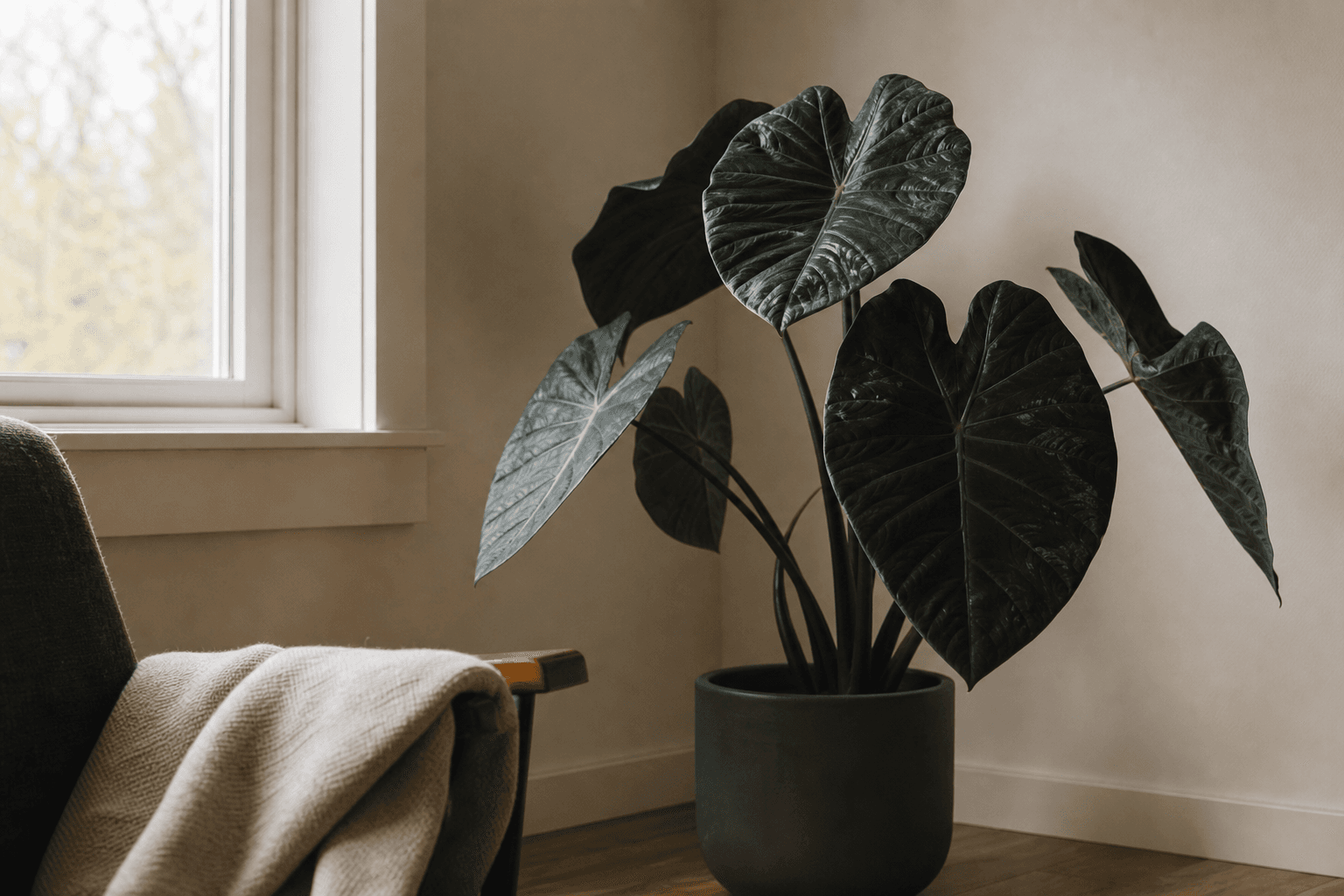
Low light needs an honest definition
A lower-light position may be near a north-facing window, beneath filtered daylight, or in a corner that still receives natural light from a nearby opening. It is not a windowless room. The RHS uses a simple test: if there is enough natural light to read by, there is generally enough for a houseplant. That is a starting point, not a promise that every plant will thrive there.
University of Minnesota Extension explains that low-light plants grow more slowly and use less water. This matters because a plant moved away from a window cannot be cared for on the same schedule as one in bright light. The room may look equally warm and inviting, but its biology has changed.
Read the position, not the room
Stand where the leaves will sit. Look toward the window: is there an open view of daylight, or is the position screened by furniture, curtains, a deep wall return or another building? A bright room can still contain a very dim corner. The RHS notes that plants set back from windows often receive little usable light, particularly in winter.
Observe the position at different times of day and during the weaker season if possible. A plant that is acceptable in summer may become leggy in winter. If the corner receives only a brief flash of sun followed by long shade, choose for the shade rather than the moment of brightness.
Build presence through form
Low light does not require timid styling. A single plant with an upright habit, dark foliage, broad leaves or a strong pot-to-plant proportion can carry more visual weight than a crowded collection. In a quiet reading corner, one composed silhouette against a pale wall often looks more intentional than several small pots competing on every surface.
Choose the role before the species. A taller upright plant can give low furniture a vertical counterweight. A compact rounded plant can give a sideboard a focal point. A trailing plant can soften a shelf only when the pot itself still receives useful light. The aim is one readable shape, not an indoor jungle built to compensate for a dark room.
Do not confuse tolerance with best performance
Many foliage plants can tolerate lower light, but tolerance is different from maintaining dense growth, large leaves or strong variegation. A plant may survive in a corner while gradually losing the very qualities that made it attractive. Choose a plant whose normal form suits the conditions, rather than buying a bright-light statement plant and expecting it to stay dramatic in shade.
Watch for evidence after placement. Stretched stems, long gaps between leaves, pale growth, reduced variegation and lower-leaf loss can suggest inadequate light. The RHS lists weak, spindly growth and pale leaves among common signs. Move the plant closer to daylight before trying extra fertiliser or water; those inputs cannot replace light.
Change watering with the light
Lower light usually means slower growth and slower drying. Feel the potting mix and lift the pot before watering instead of following a calendar. A plant in a dim position can be harmed by frequent watering intended for a brighter spot. Good drainage remains important, particularly when a nursery pot sits inside a decorative cachepot.
Keep the plant accessible. A low-light corner is not an excuse to hide the pot behind furniture. You still need to check the soil, wipe dust from leaves and notice pests or leaf drop. A plant that is easy to see is easier to care for—and the room benefits from that clarity.
When a grow light is the right answer
Sometimes the desired position is genuinely too dark for a living plant. Rather than pretending otherwise, use a dedicated grow light or choose another location. Ordinary domestic lamps are not a reliable substitute for plant lighting. A grow light can be integrated thoughtfully into a shelf, cabinet or reading corner, but it should be selected for the plant’s needs and positioned close enough to be effective.
Use supplemental light when you want a particular plant form in a room that cannot provide its natural requirements, or when winter reduces an otherwise workable position. It is not a failure of the room; it is a clear decision to make the placement viable.
Make a seasonal check
Revisit lower-light positions at the beginning of winter and after a change in the room. Shorter days, closed blinds, a new piece of furniture or a plant that has grown taller can all reduce the light reaching the leaves. Moving a plant nearer the window for part of the year is a normal adjustment, not a failure of the original choice.
Choose less, but choose it well
Keep a note of where the plant performs best. That small observation makes later styling decisions easier: you can repeat a successful light zone instead of guessing from a room’s general brightness.
The best low-light plant display is usually small. Begin with one plant that can genuinely live in the available daylight, give it a defined visual role, and leave enough room around it for its outline to show. If it remains compact, coloured and easy to care for, the placement is working. If it stretches or fades, move it toward the window or add light. A healthy plant with presence will always look more convincing than a crowded corner of plants asked to survive on too little.