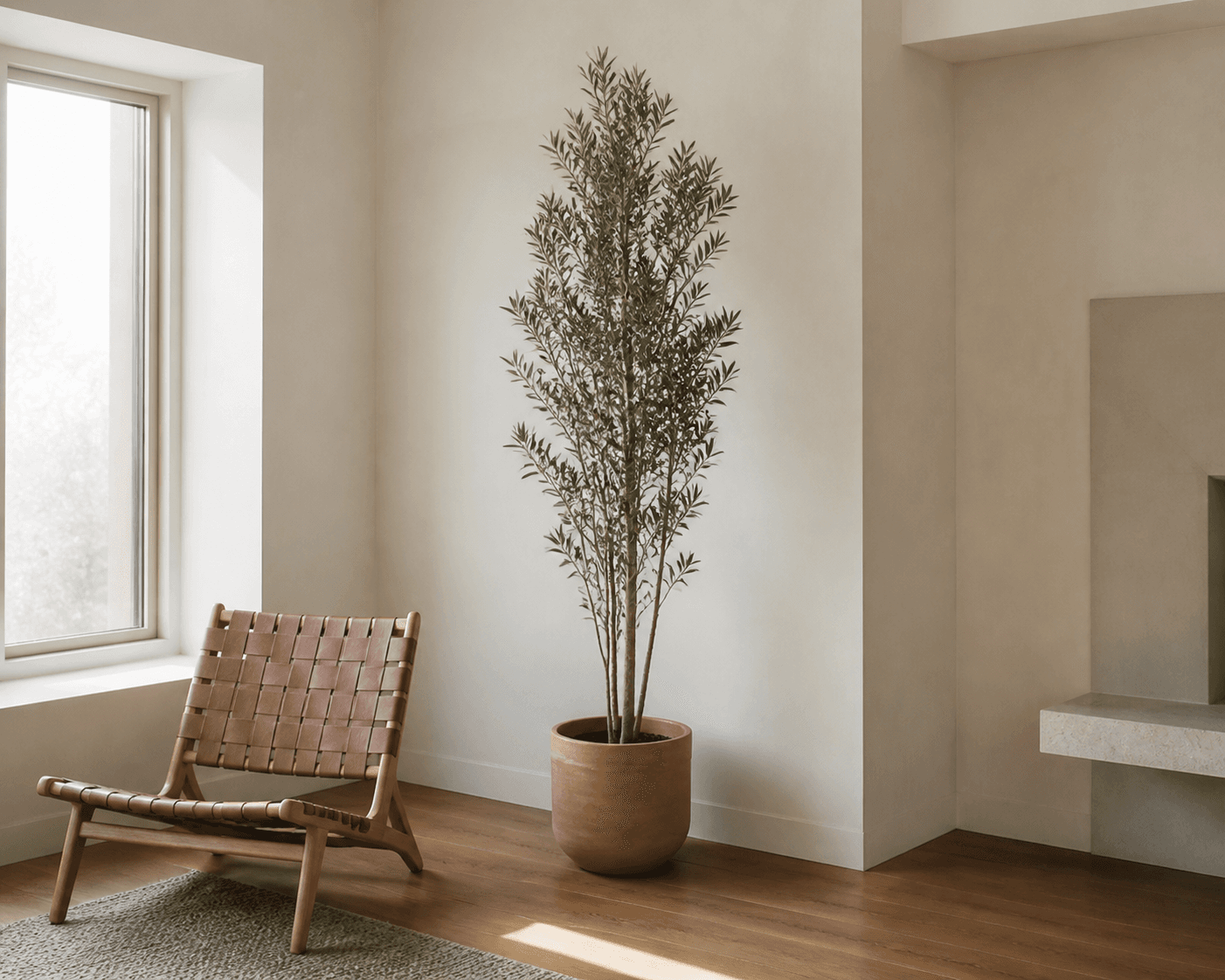
An empty corner is not automatically a plant position
Corners are tempting because they make an unfinished room feel resolved. A tall plant can soften the meeting of two walls, balance a sofa or cabinet, and add height without another piece of furniture. But empty is not the same as suitable. Many corners are farther from windows, screened by curtains, affected by radiators or doors, and difficult to reach once a pot is in place.
Begin by looking at the corner as a growing position. Stand where the leaves will be, not where the pot will sit. Can the plant see open daylight? Does the corner stay shaded behind furniture for most of the day? Is there a radiator, cold glass, air-conditioning vent or frequently opened door beside it? The RHS advises matching plants to the specific light, humidity and temperature of each room, rather than selecting for appearance alone.
If the corner has no usable natural light, a tall living plant is not the honest answer without dedicated supplemental lighting. Move the idea closer to the window, choose a smaller object for the corner, or plan a grow light as part of the installation. The room will look more considered when the plant can stay healthy.
Read the light at the future leaf height
A room may feel bright near its window while a corner behind the seating area receives little useful light. Distance, window direction, exterior shade and the depth of the room all change the result. University of Minnesota Extension notes that low-light plants grow more slowly and use less water; the farther a plant sits from the window, the more important it is to choose for the actual light rather than the room’s general atmosphere.
Observe the corner through the day before shopping. Notice direct sun, filtered light and the hours when it is simply dim. Bright direct sun can be too harsh for many foliage plants, while a location with only brief weak daylight will not support a plant bought for a bright room. A tall plant has more leaves exposed at different heights, so look at the upper and lower parts of the proposed outline rather than judging only from the floor.
If the light is marginal, do not solve it by choosing a large plant and watering more often. Weak, stretched growth and leaf loss are usually signals to improve light, not to increase feeding or water. A smaller, shade-tolerant plant nearer the opening often makes a stronger visual statement than a large plant fading in the back of the room.
Choose a silhouette before choosing a species
The best tall plant for a corner is often upright rather than broad. An upright silhouette gives the room a vertical line while leaving visible wall and floor around it. A plant with a wide, spreading crown may look impressive in an open showroom but can make a domestic corner feel blocked, especially beside a chair, doorway or curtain.
Think about the job the plant should perform. Beside low furniture, a narrow vertical form can create height and counterbalance the horizontal line. In a spacious room, a fuller branching plant may create a softer canopy effect. Against a busy wall or shelf, a simpler leaf outline may be easier to read. The plant does not need to fill every inch of the corner; a little wall around the foliage is what makes its shape visible.
Visual weight matters as much as height. Broad dark leaves and a heavy pot feel more substantial than fine foliage in a pale container. If the room already has dark furniture, patterned textiles or many objects, choose a quieter form. If the corner feels visually weak beside a pale wall and low sofa, one more decisive silhouette may be useful.
Measure the working footprint
Measure the pot base, then add the likely leaf spread and a practical route around it. A tall plant that is brushed every time someone sits down, opens a curtain or walks past will soon be moved into a worse position. Leave room to water, rotate the pot and clean fallen leaves without moving half the room.
Plan for the mature plant, not the nursery specimen. Tall plants often become wider as they gain leaves or branch toward the light. They may need a larger pot, a heavier cachepot or support as they mature. If the corner works only while the plant is small, choose a naturally contained form or use the corner for a medium plant instead.
Check the base as carefully as the foliage. The pot needs to be stable on the floor, protected from knocks, and able to drain safely. A decorative cachepot can help the plant feel grounded, but it should not hold standing water around the nursery pot. A visually perfect container that makes watering difficult creates a problem the room will eventually show.
Make care part of the placement
Tall plants are often selected as low-maintenance room anchors, but they still need ordinary attention. Leaves collect dust, growth may lean toward the window, and the soil needs checking at the pot—not guessed from a calendar. A position that is impossible to reach makes these small tasks easy to postpone.
Consider the room’s rhythm. A living room with central heating may be dry in winter; a corner near a radiator can become warmer than the rest of the room; a hallway corner may be draughty. The RHS warns that direct heat and draughts can damage foliage. Choose a stable position where the plant does not have to endure sharp changes simply because it fills an architectural gap.
If the plant begins leaning, do not keep turning it into a completely new environment. Rotate gradually when appropriate, but first check whether the corner is giving it enough light from a useful direction. A plant that constantly reaches toward a window is telling you something about the placement.
A buying decision for the corner
Before buying, answer five questions. Does the corner receive enough natural light at leaf height? Is the planned silhouette upright or broad enough for the available width? Will the mature spread leave circulation clear? Can you water and clean around the pot? And does the plant balance the room rather than merely occupy an empty space? If one answer is no, adjust the placement or the scale before choosing a species.
Take a photograph of the corner from the room’s normal viewpoint. It helps reveal whether the plant needs to be taller, narrower, lighter or simply closer to the window. It also prevents buying by memory: a corner can feel generous while the available floor depth is actually small once the furniture, curtain and path are included.
Let the corner keep some air
A tall plant should give an empty corner purpose, not make it disappear. Place it where it receives the light it needs, choose a silhouette that leaves the room usable, and allow visible space around its leaves. When those conditions are right, one plant can do more than a cluster of small pots: it gives the room a calm vertical anchor and still leaves the corner easy to live with.