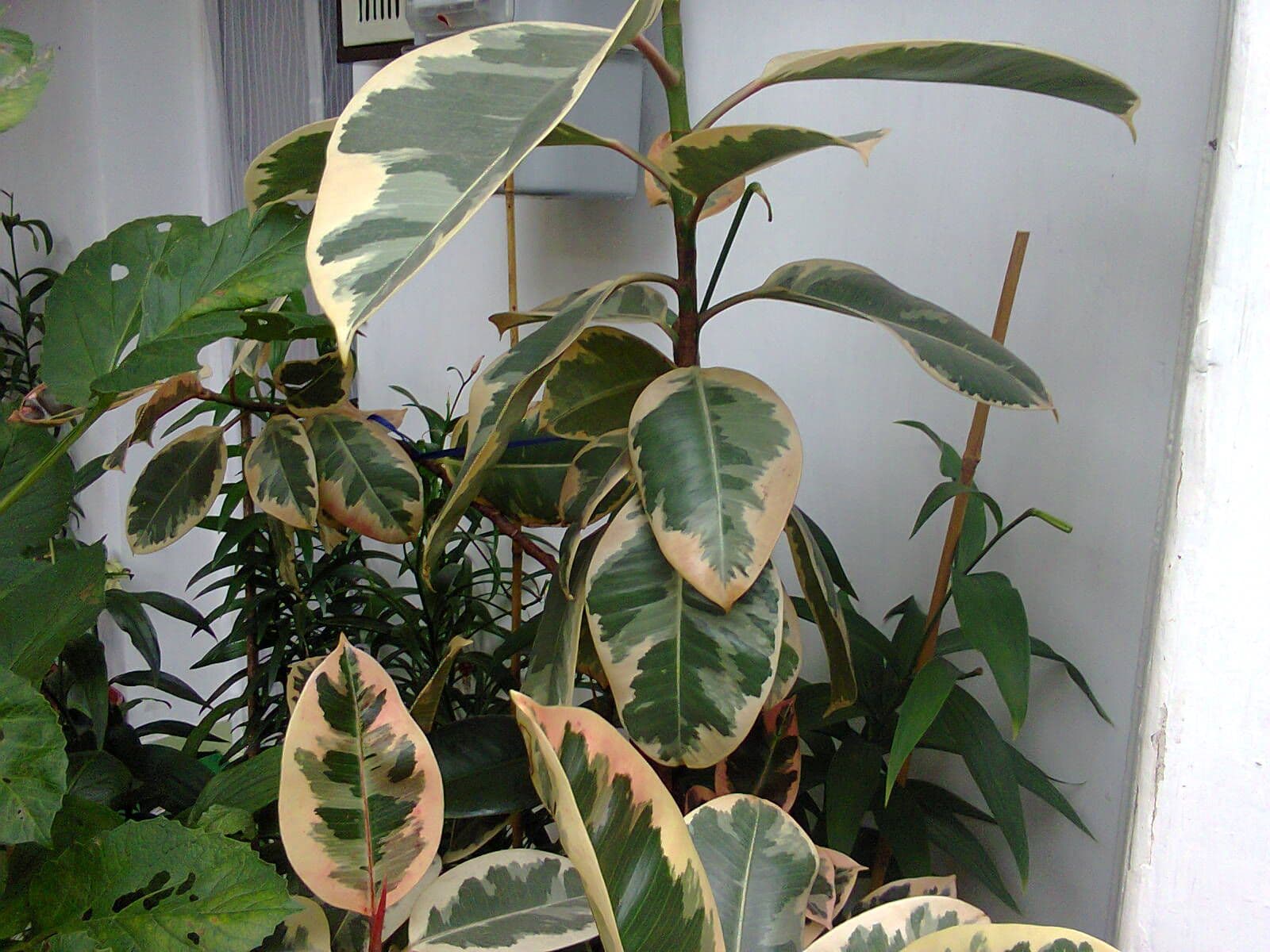
The rubber plant has the kind of shape that can finish a room without making it feel overdecorated. Its upright growth, broad glossy leaves, and relatively clean silhouette give it the presence of a small indoor tree, but it usually occupies less visual and physical space than plants with wider, looser growth.
That makes Ficus elastica especially useful in living rooms, dining areas, home offices, and bright bedrooms. It can fill an empty corner, balance a tall cabinet, or add height beside low furniture without turning the room into a dense collection of pots.
It is also commonly described as an easy houseplant. That is partly fair: established rubber plants can be fairly resilient, and their thick leaves are more forgiving than the delicate foliage of some other indoor figs. But “easy” should not be confused with “suitable anywhere.” A rubber plant still needs enough light, a stable position, sensible watering, and enough room to grow into the strong shape people buy it for.
Why the rubber plant works so well visually
A rubber plant has clear visual weight. Even a relatively young plant can feel substantial because its leaves are large, smooth, and often deep green or burgundy.
This makes it a useful anchor in a room. Instead of arranging several small plants to fill a corner, one rubber plant can create a single, readable shape. That often looks calmer and more intentional.
Its form also works with many interior styles. A dark-leaved cultivar can add contrast to pale neutral rooms, timber furniture, and warm minimal interiors. A standard green rubber plant feels quieter and more adaptable. Variegated forms such as ‘Tineke’ can bring cream and soft pink into a room, although they generally need brighter conditions to keep their colour and compact growth.
The plant is especially effective when there is a relatively plain background behind it. Large leaves are easier to appreciate against an uncluttered wall than in front of a busy shelf or patterned curtain.
The best places for a rubber plant indoors
The most natural placement is near a bright window where the plant receives plenty of indirect light.
Good locations include:
- beside a living-room window
- at the end of a sofa where it will not block movement
- beside a low sideboard or media unit
- in a bright dining room
- near a desk in a well-lit home office
- in a spacious bedroom with strong natural light
A rubber plant can also work in a corner, but the phrase “corner plant” can be misleading. Many corners are much darker than the centre of the room, even when the room itself appears bright. The plant should be positioned according to the light reaching its leaves, not according to whether an empty corner needs decoration.
The plant’s leaves can also become wide enough to brush against walls, curtains, or passing people. Leave some space around it rather than pushing the pot tightly between furniture.
How much light does a rubber plant need?
Bright, indirect light is the safest recommendation for most indoor rubber plants. The Missouri Botanical Garden recommends bright indirect light or part shade indoors, with protection from strong afternoon sun. The RHS also describes rubber plants as robust houseplants but still advises matching ornamental figs to suitable light and stable indoor conditions.
A green-leaved rubber plant may tolerate somewhat lower light, but tolerance is not the same as good growth. In a dim position, the plant may grow slowly, produce smaller or more widely spaced leaves, and lose the dense, upright presence that makes it valuable in a room.
Variegated cultivars need brighter light because they have less green tissue available for photosynthesis. A ‘Tineke’ or similar variegated plant may lose colour quality or become weaker when placed too far from a window.
Direct sun is not automatically harmful, but a plant that has been grown in softer nursery light should be introduced gradually. Sudden exposure to harsh afternoon sun can damage leaves.
Watering without relying on a calendar
Rubber plants should be watered thoroughly, then allowed to dry somewhat before the next watering.
That does not translate into one universal schedule. A large plant in a warm, bright room may use water much faster than a small plant in winter. Pot size, soil, temperature, and season all affect drying time.
Check the potting mix before watering. When the upper layer has dried and the pot feels lighter, water until excess drains from the bottom. Empty any water collected inside a decorative cachepot or saucer.
Constantly wet soil is a bigger risk than briefly waiting an extra day. Good drainage matters, particularly when the nursery pot is hidden inside a decorative planter.
Thick leaves help the plant tolerate short dry periods, but repeated severe drying can still lead to stress and leaf loss. The goal is a regular wet-to-partly-dry cycle rather than permanently damp soil or long neglect.
A stable position matters
Ficus plants are known for reacting to sudden environmental changes. A rubber plant may drop leaves after being moved from a nursery to a home, shifted into a much darker room, exposed to cold drafts, or placed beside heating and air-conditioning vents.
That does not mean it can never be moved. It means placement should be considered before the plant becomes large and difficult to relocate.
Choose a position with:
- consistent light
- no regular cold drafts
- some distance from radiators or vents
- enough room for future leaf spread
- easy access for watering and cleaning
Rotating the pot occasionally can encourage more even growth, especially when light comes strongly from one direction. Rotate gradually rather than constantly changing the plant’s whole environment.
How large will it become?
Outdoors in tropical climates, Ficus elastica is a large evergreen tree. Indoors, its size is constrained by light, pot size, pruning, and ceiling height, but it can still become a substantial houseplant.
This is part of its appeal and also its main practical drawback.
A young rubber plant may look compact in a shop, yet over time it can become tall and top-heavy. Before buying one for a small room, imagine the plant at least twice its current height and with a broader crown.
Pruning can control height and encourage branching, but it changes the shape. A single-stem plant gives a clean vertical line. A pruned and branched specimen becomes fuller and may need more horizontal space.
For a narrow room, a single-stem plant may work better. For an open living room, a fuller specimen can create a stronger canopy effect.
Choosing the right rubber plant cultivar
The cultivar affects both the room and the care demands.
Standard green or ‘Robusta’
Deep green leaves, strong structure, and the easiest visual fit. This is the safest choice for most homes because it works with many palettes and generally handles ordinary indoor conditions better than heavily variegated forms.
‘Burgundy’ or other dark forms
Very dark leaves create more contrast and visual weight. These work especially well in pale, warm, or minimal interiors, but can feel heavy in already dark rooms.
‘Tineke’
Cream, green, and sometimes pink-tinted foliage makes the plant more decorative. It suits light neutral rooms but needs brighter light to maintain strong variegation.
‘Ruby’
More pronounced pink or red tones make this a clear feature plant. It can be striking, but it is less visually flexible and may compete with other colours in the room.
For the publication’s general reader, a standard green or dark-leaved rubber plant is usually the strongest starting recommendation. It is easier to style and less dependent on perfect brightness.
Choosing a planter
Because the leaves are broad and glossy, a simple planter usually works best.
Good options include:
- matte ceramic
- restrained stone-effect finishes
- dark planters for a monolithic look
- warm off-white pots for contrast
- terracotta when the room already uses warm natural materials
A very small or visually delicate pot can make a tall rubber plant look unstable. The outer planter should feel proportional to the foliage and heavy enough to visually ground the plant.
The decorative pot should not trap water around the nursery pot. If using a cachepot without drainage, remove the inner pot for watering or empty the cachepot completely afterwards.
Avoid surrounding the plant with too many small accessories. The rubber plant is strongest when its leaves and vertical form are allowed to do most of the work.
Practical drawbacks
The rubber plant is useful, but not universal.
Its main drawbacks are:
- it needs reasonably good light
- it can grow too large for its original location
- lower leaves may be lost after stress or poor conditions
- large leaves collect visible dust
- the plant may lean strongly toward a window
- its milky latex sap can irritate skin
- Ficus species should be kept away from pets that chew plants
Dust is both a visual and plant-health issue. Wipe the leaves gently with a damp cloth when needed. Avoid leaf-shine products unless a reliable horticultural source specifically supports the product being used.
When pruning or handling broken stems, gloves are sensible because of the latex sap.
When another plant may be better
Choose something else when the room is genuinely dim, the available floor area is very tight, or a pet regularly bites leaves.
A snake plant or upright dracaena may suit a narrower footprint. A cast-iron plant may be more realistic for lower light. A parlor palm creates a softer effect where the rubber plant would feel too heavy.
The rubber plant is not the right choice simply because a room needs height. It is the right choice when the room has enough light, enough space around the leaves, and enough visual calm to let one strong plant act as an anchor.
The verdict
For many real homes, the rubber plant is one of the better indoor statement trees. It has enough presence to shape a room, but its silhouette remains simpler than a cluster of small plants or a very wide indoor tree.
The best version is not pushed into the darkest empty corner. It is placed close enough to good natural light, given room to grow, and allowed to stand as one clear part of the interior.
When those conditions are available, a rubber plant does not need much decoration around it. Its scale, leaves, and shape already give the room what it was missing.
---