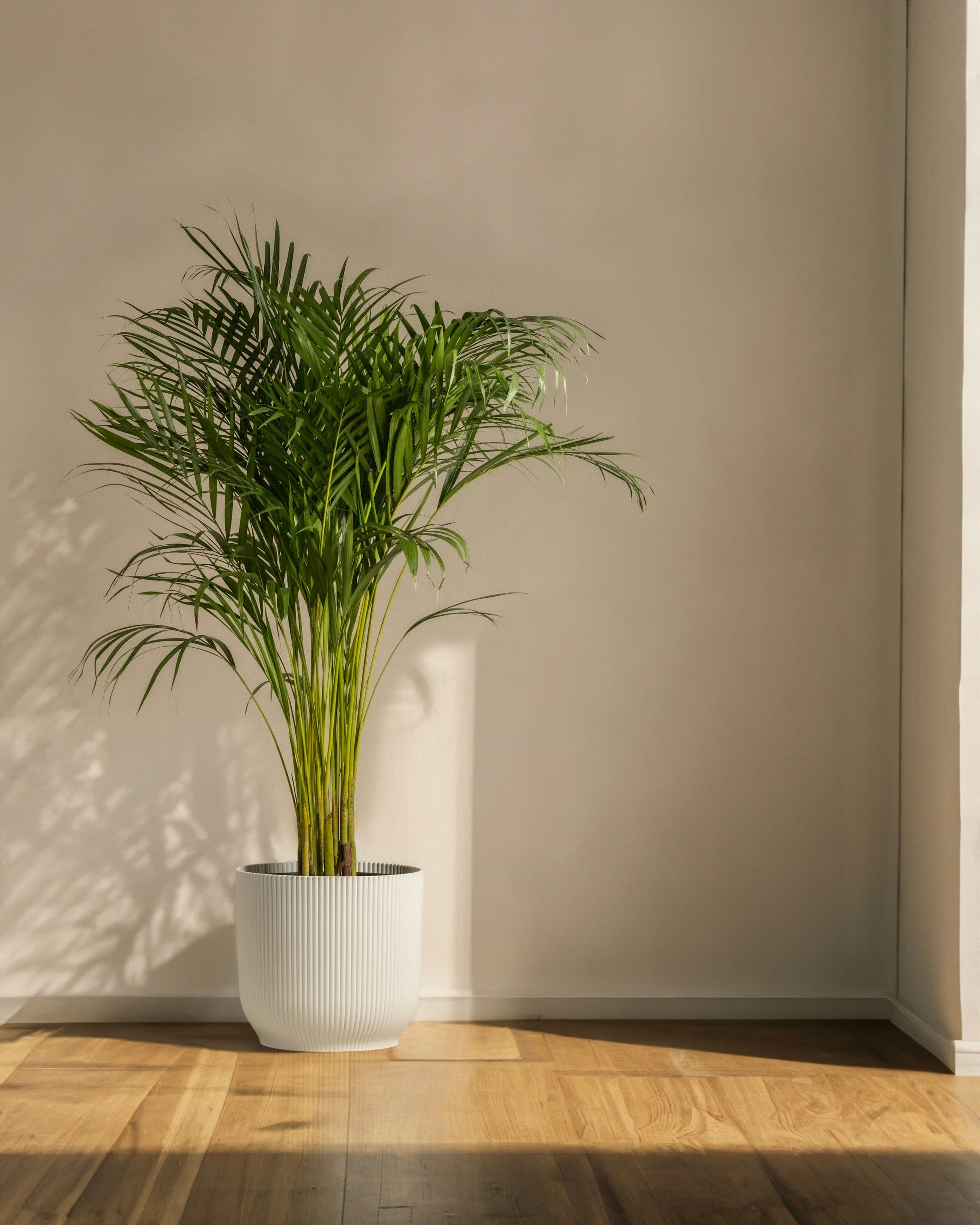
A plant pot can mark a wood floor long before anything looks wrong from above. Water can escape through a drainage hole, collect inside a cachepot, wick through porous terracotta, or remain trapped under a saucer. Add the weight of a large plant and a little grit beneath the base, and a quiet corner can develop a dark ring, a dulled finish, or scratches.
The solution is not to stop plants from draining. Healthy roots still need excess water to leave the growing pot. The reliable approach is to manage that water after it drains, then keep both the container and its protective layer from sitting damp against the floor.
Use a three-part protection system
The safest setup separates three jobs that are often confused. The inner pot supports the plant and lets water drain. A waterproof saucer or cachepot catches that drainage. A clean, floor-compatible contact layer keeps the hard container from scratching the finish and creates a small break between the wet zone and the wood.
For most floor plants, that means:
- a nursery or growing pot with unobstructed drainage holes;
- a watertight saucer, tray, or cachepot large enough to contain the expected runoff; and
- floor-safe pads, feet, or a stable plant stand beneath the dry outer container.
Penn State Extension recommends pots with drainage holes, a drip tray for surfaces that are not waterproof, and removing excess water from a cachepot after watering. That last step is essential. A container can catch water successfully and still damage the floor if the water stays hidden for days.
Choose protection that is stable under the full weight of the watered plant. Check the flooring manufacturer's instructions before using an adhesive pad, rubber-backed mat, or unfamiliar material, because finishes and product warranties vary.
Drainage and floor protection are not opposites
A common shortcut is to plant directly into an attractive pot without a drainage hole so water cannot reach the floor. This only moves the risk inside the container. Excess water can accumulate around the root ball where it is difficult to see or remove.
A better arrangement is a draining inner pot inside a watertight outer cachepot. Leave enough room to lift the inner pot and check the bottom. After watering, allow it to drain, then empty any water collected in the outer pot. If the planter is too large to lift comfortably, use a removable deep saucer or another catch system that you can inspect and empty without tipping the plant.
Do not assume a decorative basket is a waterproof cachepot. Woven fibers, wood, unsealed ceramics, and some metal containers can pass moisture to the floor or conceal a leaking liner. Use a separate watertight insert and inspect its seams before trusting it over wood.
Terracotta also deserves special care. Unglazed clay is porous, so moisture and mineral salts can migrate through the pot. A terracotta pot should not sit directly on a wood floor, even when its drainage hole is plugged. Give it a watertight saucer and a dry protective layer beneath that saucer.
Choose a saucer that can handle a real watering
The saucer should extend beyond the pot's drainage area and hold more than a token amount of water. A shallow plate that overflows during one thorough watering is decoration, not protection. Check for cracks, crazing, warped plastic, and chipped glaze before placing it on the floor.
Clear plastic saucers are visually quiet and make the water level easy to see. Glazed ceramic and metal trays can look more deliberate, but only if they are genuinely watertight and their undersides cannot scratch the finish. Whatever the material, start with a clean, dry base. A single grain of potting grit beneath a heavy planter can score the floor when the pot is rotated.
Felt pads can reduce scratching, and Bona specifically recommends saucers with felt pads or other protection under plant pots. Felt is not a waterproof barrier, however. If it absorbs overflow or condensation, replace or dry it before returning the pot. The waterproof layer must remain above it.
A raised saucer, planter feet, or a purpose-made stand can make hidden moisture easier to spot and allow cleaning around the base. Stability matters more than height: the plant should not rock, lean, or concentrate its weight on a few sharp points.
Water in a way that makes runoff visible
Small and medium plants are easiest to protect when they can be watered at a sink, tub, or another water-resistant surface. Let the pot drain fully, wipe its exterior, and return it only when the saucer and the floor are dry. This is particularly useful for porous clay pots.
Large plants often need to be watered in place. Use a watering can with a controlled spout, add water gradually, and stop long enough to see what reaches the tray. Empty the runoff with a small pump, baster, sponge, or removable saucer rather than leaving the plant standing in it. Do not pour so cautiously that only the top of the potting mix becomes wet; the aim is still even watering with managed drainage.
Avoid watering immediately before moving a large plant. Wet potting mix adds weight, and hurriedly sliding a planter is when grit and hard edges are most likely to scratch the finish. If the plant must move, lift it with appropriate help or use a plant caddy rated for the combined weight of the plant, wet mix, inner pot, and outer container.
Wheels are useful only when they stay clean, roll smoothly, and are compatible with the floor. Locking casters prevent a tall plant from shifting accidentally. Never drag a loaded saucer or cachepot across the boards.
Inspect beneath the pot, not only around it
The dangerous leak is often the one that never appears beyond the edge of the planter. Set a simple inspection schedule: after each watering at first, then regularly once you know how the system behaves. Lift or move the protective assembly, check the underside, and touch the floor for moisture.
Look for:
- standing water inside the cachepot or saucer;
- damp felt, cork, fabric, or basket liners;
- hairline cracks or rust at seams;
- white mineral deposits that show where water has traveled;
- grit caught beneath pads or wheels;
- a dull patch, raised board edge, dark ring, or change in color.
Clean and dry the floor before returning the plant. Moving the pot occasionally also lets you clean beneath it and notice changes caused by sunlight. Bona advises repositioning plant pots from time to time to reduce uneven color change. Make that a controlled lift, not a casual slide.
Protect the floor without creating a damp zone
A rug or decorative mat can make a plant corner feel finished, but it should not be treated as the primary water barrier. Fabric can hide a small overflow and hold it against the floor. The same caution applies to cork and unfinished wood platforms: both can be useful contact materials when kept dry, but neither replaces a watertight tray.
Avoid enclosing a damp base under layers that are difficult to inspect. A visible, slightly raised setup is often safer and visually lighter than a pot nested inside a basket, on a mat, over a rug. If you prefer the layered look, make every component removable and keep the waterproof catch layer directly under the draining pot.
For very heavy planters, spread the load through a stable stand or caddy designed for the purpose, and check any limits given by the flooring or stand manufacturer. The National Wood Flooring Association recommends protector pads beneath objects that contact wood floors; the same principle applies here, but the pads need enough area and must remain clean and dry.
What to do when water reaches the wood
Act immediately. Move the pot safely, blot the liquid with a dry or slightly damp soft cloth, and let the area dry with good ventilation. Both the National Wood Flooring Association and major flooring manufacturers advise cleaning spills promptly rather than leaving moisture on wood.
Do not reach first for a steam mop, abrasive cleaner, wax, oil, or a universal stain remedy. The correct response depends on whether the floor is solid or engineered, factory-finished or site-finished, lacquered or oiled. Use the floor manufacturer's care instructions. If a dark ring, raised edge, cupping, or finish damage remains after the surface is dry, contact the flooring manufacturer, installer, or a qualified wood-floor professional before sanding or refinishing the spot.
The simplest setup is usually the safest
A well-protected plant does not need a bulky stack of accessories. It needs one pot that drains, one catch layer that cannot leak, and one stable interface that will not scratch the floor. Empty the runoff, keep the underside dry, and inspect it often enough that a small problem stays small.
That system protects the plant as well as the room. Drainage remains functional, the planter can still look considered, and the floor is not asked to absorb the consequences of watering.