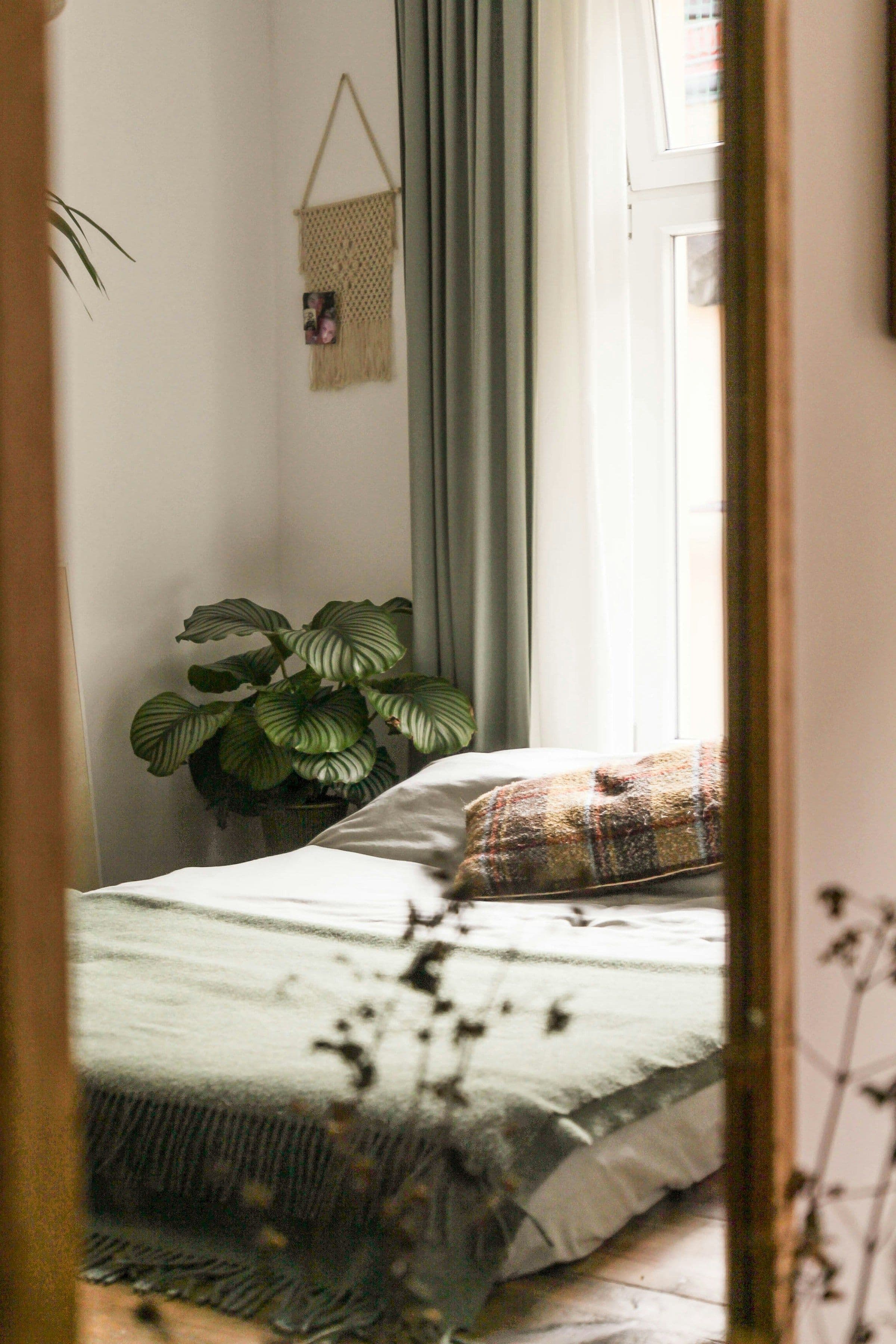
The best bedroom plant is not automatically the plant associated with sleep, clean air, or a fashionable bedside photograph. It is the plant whose light and watering needs match the room, whose mature shape fits the available space, and whose presence does not compete with everything the bedroom already has to do.
The strongest choices are snake plant, ZZ plant, cast-iron plant, baby rubber plant, and parlor palm. They offer different silhouettes and levels of pet safety, but all can work as clear individual forms rather than collections. The final choice should begin with the window, not the bedding color.
Begin with the bedroom's actual light
All living plants need light for photosynthesis. A bedroom described as bright may still have a plant position that is too far from the window, shaded by a neighboring building, or kept dark by closed curtains. Before buying anything, observe where daylight falls and for how long.
University of Minnesota Extension places snake plant, cast-iron plant, parlor palm, and ZZ plant among plants suited to lower indoor light. That does not mean they need no light. Growth is slower in weaker light, variegation may become less distinct, and the potting mix stays wet longer. A windowless bedroom requires a suitable grow light, not a plant advertised as indestructible.
Keep the plant close enough to receive useful light without obstructing curtains or touching cold glass. If blackout curtains stay closed well into the day, place the plant outside their path or open them consistently after waking.
1. Snake plant: the narrowest strong silhouette
Snake plant, Dracaena trifasciata, is the clearest choice when the bedroom needs height but has little spare width. Its stiff leaves rise directly from the pot, so it can sit beside a low dresser or in a protected corner without extending over the bed.
Choose a tall form for the floor and a compact bird's-nest cultivar for a nightstand or shelf. Avoid placing sharp leaf tips where an arm reaches for a lamp or where clothing brushes past every morning. Let the potting mix dry between waterings and use a container with drainage; lower-light positions require particular restraint.
Snake plant is toxic to cats and dogs if eaten. In a home with an animal that chews foliage, choose one of the pet-safer options below rather than assuming a floor plant will remain untouched.
2. ZZ plant: glossy structure for lower light
ZZ plant, Zamioculcas zamiifolia, produces arching compound leaves with evenly spaced glossy leaflets. The result is softer than a snake plant but still visually contained. It works beside a chest of drawers, at the end of a low cabinet, or as one medium floor plant against a quiet wall.
Its thick rhizomes and leaves store water, and wet soil is a greater danger than a short dry period. Allow the mix to dry before watering and keep the plant out of harsh direct sun. Although ZZ can tolerate very low light, brighter indirect light generally supports better growth.
An established plant can reach roughly two to four feet in height and width, so it is not permanently narrow. It is also toxic to cats and dogs and should not be used where foliage is likely to be chewed.
3. Cast-iron plant: broad leaves without visual fuss
Cast-iron plant, Aspidistra elatior, suits a bedroom that needs a darker, quieter mass rather than a sharply graphic accent. Individual leaves rise from the base to form a loose upright clump. The plain green species is visually calmer than heavily speckled or striped cultivars.
It tolerates shade and neglect better than many broad-leaved plants, but it still prefers indirect light, drainage, and sensible watering. Direct sun can bleach or scorch the leaves. Its mature clump may spread one to three feet, so reserve it for a real floor position rather than squeezing it between a bed and a door.
The ASPCA lists cast-iron plant as non-toxic to cats and dogs. That makes it one of the most useful bedroom choices when pet access cannot be controlled.
4. Baby rubber plant: compact enough for furniture
Baby rubber plant, Peperomia obtusifolia, is a better nightstand or dresser plant than a miniature version of a future floor plant. It has thick, rounded leaves, a contained bushy habit, and usually remains under two feet.
Give it bright indirect light when possible. It may tolerate lower light for a time, but very wet soil, severe dryness, and cold drafts can all cause problems. Keep it away from the direct path of heating or air-conditioning vents and use a small pot with drainage rather than an oversized decorative container.
The ASPCA lists Peperomia obtusifolia as non-toxic to cats and dogs. Its compact scale also makes it easier to position without sacrificing the usable part of a bedside surface.
5. Parlor palm: one soft form for an open corner
Parlor palm, Chamaedorea elegans, is the option for a bedroom that feels too rigid and needs a softer outline. Its fine leaflets and arching fronds can balance plain bedding and boxy furniture. Use it as one floor-level composition rather than surrounding it with other feathery plants.
It tolerates lower light but does best in bright indirect light, and it prefers well-drained mix that dries slightly between waterings. A nursery pot may contain several palms grouped together for fullness, so the plant can become wider and more visually active than its footprint initially suggests.
Allow roughly two to three feet for the fronds instead of treating it as a narrow corner filler. The ASPCA lists parlor palm as non-toxic to cats and dogs.
How to keep bedroom plants from creating clutter
Start with a limit: one floor plant, one furniture plant, or one of each in a large bedroom. Do not distribute small pots across both nightstands, the windowsill, dresser, headboard, and shelving simply because those surfaces exist. Empty space is part of the composition.
Keep containers related without making them identical. Repeating one material family—matte ceramic, terracotta, or restrained metal—will make two plants read as part of the room. Avoid combining variegated foliage, patterned pots, woven baskets, trailing stems, and decorative stands in the same small zone.
Protect the practical routes. Leaves should not touch pillows, block a closet door, catch on clothing, or force someone to step around a saucer at night. Keep soil, drainage water, and damp pots off wood furniture and flooring with a waterproof internal saucer or cachepot system that can be emptied easily.
Watering is different in a dimmer room
Plants in lower light use water more slowly. A schedule copied from a sunny living room can leave bedroom potting mix wet for too long. Check the mix itself, then water according to the needs of the species and allow excess water to drain completely.
Nightstands and dressers make drainage awkward, which is another reason to keep the number of plants low. A nursery pot inside a watertight cachepot is practical only if it can be lifted out for watering and the outer container is emptied afterward. Decorative stones at the bottom do not replace a drainage hole.
Inspect leaves periodically for mites, scale, or mealybugs and wipe away dust. A bedroom plant should remain a healthy part of the room, not become a neglected object because it sits beyond the most frequently used living spaces.
Do not buy a bedroom plant to purify the air
Houseplants can make a room more pleasant, but ordinary domestic use does not make them an effective substitute for ventilation or filtration. Penn State Extension summarizes research estimating that hundreds of plants would be needed in a typical home to approach the air exchange produced by opening windows.
Claims that one snake plant beside the bed will meaningfully clean the air or improve sleep should not determine the purchase. Choose plants because their form suits the bedroom, their care is realistic, and you enjoy living with them. Open windows when conditions allow, maintain mechanical ventilation, and treat the plant as a living design element rather than health equipment.
A calm bedroom does not need a botanical theme. It needs one clear plant decision made from the available light, space, and household risks. Choose the narrow structure of a snake plant, the glossy rhythm of a ZZ, the quiet leaves of cast iron plant, the compact shape of peperomia, or the softness of a parlor palm—then leave enough room around it to be seen.