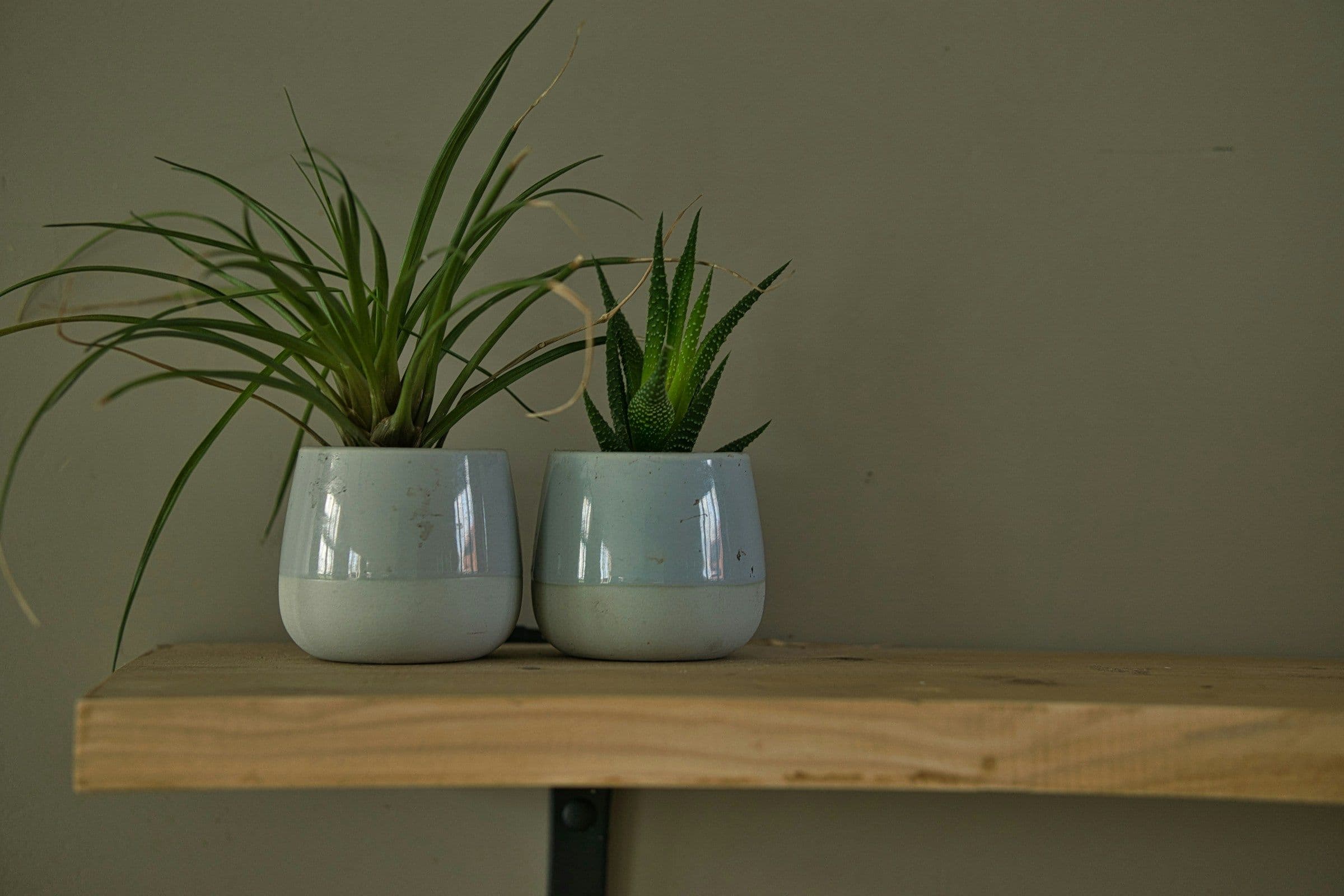
A decorative cachepot should be large enough for the plant's nursery pot to slide in and out without scraping, with space beneath it for drainage and enough room at the top to lift it out. It should not be so wide that the inner pot leans, disappears, or leaves a conspicuous dark ring around the plant.
As a practical starting point, look for an internal diameter about half an inch to one inch wider than a small or medium nursery pot. For a large floor plant, one to two inches of total side clearance is often easier to handle. Those are fitting allowances, not rules for root growth. The exact match depends on the widest rim of the inner pot, the narrowest point inside the cachepot, its taper, and how the plant will be watered.
First, separate the growing pot from the cachepot
The growing pot is the container holding the roots and potting mix. It needs functioning drainage holes and should be sized for the root system. The cachepot is the decorative outer container that hides the growing pot and catches or contains runoff. It usually has no drainage hole and should not be filled with potting mix simply because it is larger.
Penn State Extension describes this as placing a potted houseplant inside an overpot or cachepot. The inner container provides drainage; the outer container provides the finish. Keeping those jobs separate makes watering easier, protects furniture, and lets you change the room's look without disturbing the roots.
This distinction also prevents unnecessary repotting. A plant does not need a larger growing pot because a larger decorative pot looks better. Repot only when the plant and roots indicate that more growing space is needed. University of Minnesota Extension notes that moving a houseplant into a container that is too large can leave excess potting mix wet for too long and increase the risk of root problems.
Measure the inner pot in three places
Do not shop from the nursery label alone. A pot described as six inches may have a flared rim wider than its nominal diameter, and two decorative pots sold under the same size can have very different internal openings.
Measure the nursery pot across its widest outside point, including any rolled rim, side handle, or lip. Then measure its full outside height from the base to the top edge. Finally, look at the base: drainage feet, a raised center, or a protruding saucer can change how the pot sits.
For the cachepot, use internal measurements rather than the outside diameter. Check the opening, the narrowest point in the body, and the usable depth. A thick ceramic wall can make a planter look generous from the outside while leaving little space within. If the cachepot narrows toward the bottom, confirm that the inner pot reaches the intended depth without becoming wedged.
When shopping in person, bring the clean empty nursery pot if practical. When ordering online, compare the internal dimensions and ask the seller when only exterior measurements are listed. A returnable paper template cut to the widest diameter can help test a narrow opening, but it cannot reveal an internal ledge or taper.
Choose side clearance for removal, not empty space
The best fit lets you lower the growing pot straight into the cachepot and lift it out again with dry hands. For many pots up to about eight inches across, roughly half an inch to one inch of total extra internal diameter is a useful starting range. That means approximately a quarter to half an inch around the pot. For heavier floor plants, one to two inches of total extra diameter can provide more finger room.
Treat that range as a test, not a promise. A flexible plastic nursery pot with a pronounced rim may need less clearance than a rigid terracotta pot. A cachepot with an inward-curving opening may need more. If the foliage begins at soil level or trails over the rim, you may need enough room to lift from beneath rather than reaching through the leaves.
Too tight is not elegant. It makes the growing pot difficult to remove, can scratch a glazed interior, and encourages watering in place when the plant would be safer to drain elsewhere. Too loose creates a different problem: the plant may sit off-center, tilt during movement, or look temporarily dropped into a container meant for something larger.
If a loose fit is otherwise visually right, use a stable, moisture-resistant centering insert that does not block inspection or drainage. Do not pack the gap with potting mix. The growing pot should remain a distinct, removable container.
Get the height right at the rim
The top of the nursery pot usually looks most resolved when it sits level with the cachepot rim or slightly below it. A drop of roughly a quarter to half an inch can hide black plastic without burying the stems. The exact position should still leave the inner rim easy to grasp.
If the growing pot sits too low, do not fill the bottom with loose soil. Use a stable waterproof riser, an inverted saucer, or another nonabsorbent support that can carry the wet weight without tipping. The support should leave the drainage holes free and make collected water visible enough to empty.
If the nursery pot projects far above the decorative rim, the cachepot is probably too short for the intended effect. A small visible edge is often unobtrusive and makes lifting easier; several inches of exposed plastic usually looks accidental. Check that a taller cachepot will not cover the plant's crown, trap lower leaves, or make it harder to see and remove standing water.
Leave real drainage space beneath the pot
A cachepot must not turn drainage holes into a sealed base. Penn State Extension recommends leaving space between the inner pot's drainage holes and the bottom of the decorative container, using a saucer if needed, and removing excess water after watering.
The cleanest method is often to lift the plant out, water it over a sink or suitable drain, let it finish dripping, and return it to the cachepot. For a large plant watered in place, use a removable inner saucer or riser and check the collected water after every watering. The bottom of the growing pot should not remain submerged.
Loose pebbles at the bottom do not create drainage inside a pot and can make runoff harder to see or remove. Penn State Extension specifically cautions that a pebble layer beneath potting mix does not improve drainage. Inside a cachepot, any spacer has a different job: physically keeping the removable growing pot above collected water. A washable, stable support does that more predictably than a deep hidden layer of stones.
Match the cachepot to the plant's visual weight
Once the fit works, judge the proportion from the room rather than from directly above the pot. Fine leaves and an airy crown can sit comfortably over a quiet, compact cachepot. Broad leaves, thick stems, or a tall canopy usually need a visually firmer base.
The answer is not always a wider pot. A straight-sided or slightly tapered container can feel grounded without occupying much more floor. Dark colors, thick rims, textured surfaces, and low broad shapes carry more visual weight than pale, thin, tall forms of the same diameter.
Aim for the plant and pot to read as one composition. A tiny cachepot under a mature top-heavy plant can look unstable even if the nursery pot technically fits. An oversized outer pot can make a healthy medium plant look unfinished. Photograph the combination from the room's normal viewpoint; the camera often reveals a weak or bulky proportion more clearly than standing over it in a store.
Account for weight and stability
The cachepot has to support the plant at its heaviest: after watering, with wet potting mix, the nursery pot, any saucer or riser, and the decorative container itself. Large ceramic and stone pots can become difficult to move safely. Check the furniture or plant stand's stated load capacity and keep the base fully supported.
For a tall plant, the inner pot should sit flat and centered. Do not use a stack of unstable dishes to gain height. A broad cachepot can improve visual balance, but it cannot correct a severely top-heavy plant or a flexible nursery pot that collapses when lifted. Address the growing pot and support first.
Protect the surface beneath the cachepot even when it appears watertight. Condensation, a hairline crack, grit, or water spilled between the two pots can mark wood and other sensitive finishes. Use an appropriate waterproof barrier and floor-safe pads, then inspect beneath the container regularly.
Plan for watering and future growth
Before buying, rehearse the care routine. Can you grip the nursery rim without catching leaves? Can you carry the wet plant to a sink? Can you see whether water has collected? If the plant is too heavy to lift, can a saucer, pump, or removable spacer be reached without dismantling the display?
Leave only the clearance the current routine needs. Buying an outer pot several sizes larger in anticipation of future growth usually weakens the proportion now and does not remove the need to choose the next growing pot carefully. When the plant genuinely needs repotting, remeasure the new inner pot and reassess the cachepot.
A cachepot can sometimes stay in use through one modest growing-pot change, particularly if its sides are straight and its opening is generous. But that flexibility is a bonus, not the main sizing goal. The best container is the one that works safely and looks intentional with the plant today.
A quick fitting test before you buy
Start with the widest outside diameter and full height of the nursery pot. Compare them with the cachepot's internal opening, narrowest internal diameter, and usable depth. Allow modest side clearance for fingers and a small drop at the rim, then reserve space below for free drainage and a stable support if needed.
Set the plant inside and lift it out twice. Check that it stays centered, the stems and lower leaves remain clear, and the inner pot never wedges. View the combination from across the room, then imagine carrying or draining it at full wet weight.
The right cachepot is not simply the next number up. It is an outer container that hides the nursery pot without trapping it, keeps drainage functional, and gives the plant a base that feels believable in the room. When all three conditions are met, the decorative pot does its job quietly—and the plant remains easy to care for.
---