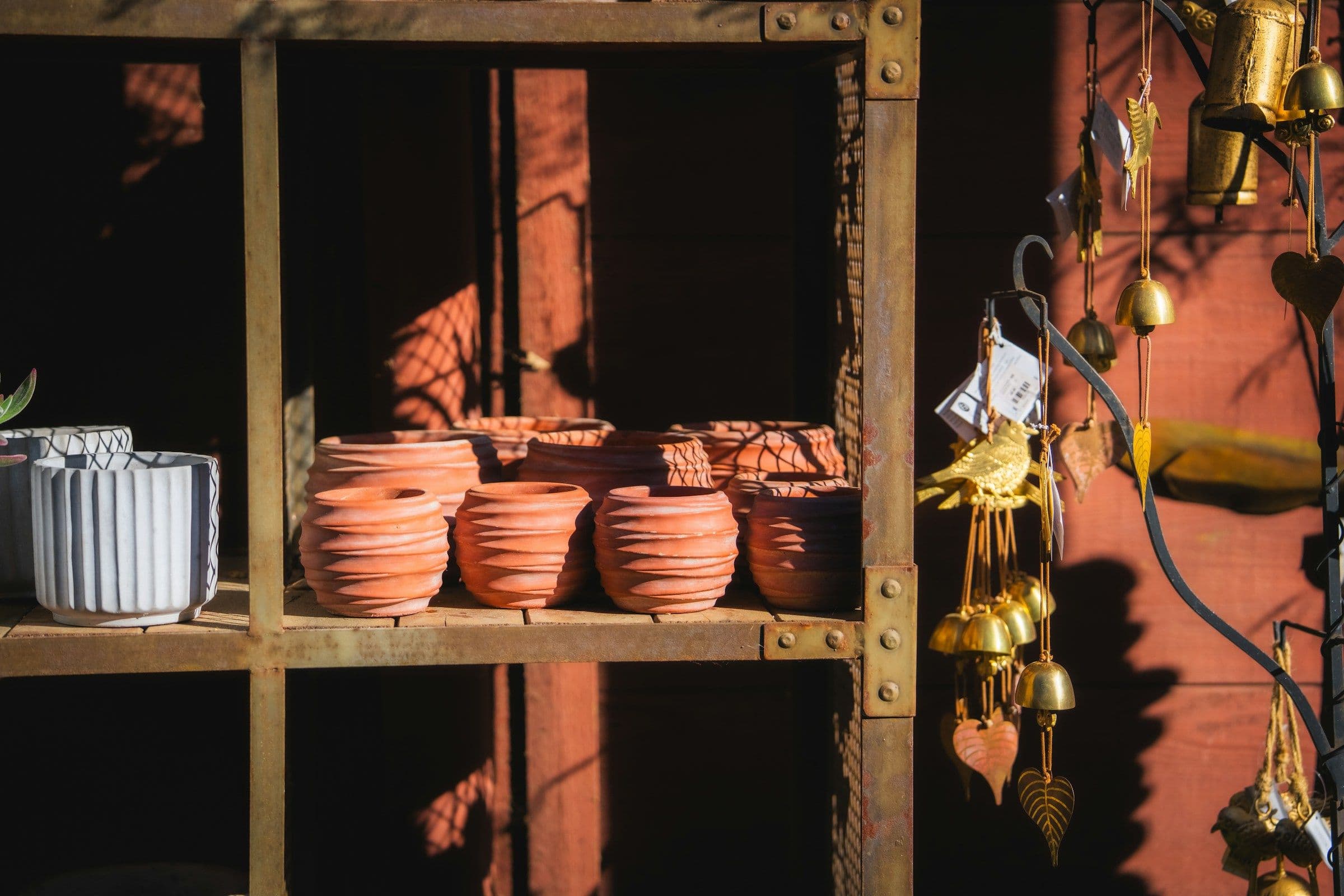
Choose terracotta when faster drying, a matte natural finish, and visible aging suit the plant and your watering routine. Choose glazed ceramic when you want slower moisture loss through the pot walls, more color and finish options, and a surface that is generally easier to wipe clean. In either case, the growing container still needs a functioning drainage hole.
Neither material is universally healthier for roots. Pot size, drainage, potting mix, light, temperature, and the person holding the watering can remain more important than the label. A terracotta pot can stay waterlogged in dense mix; a glazed ceramic pot can work perfectly with an airy mix and attentive watering.
First, clarify what the names mean
Terracotta is a ceramic material. The University of Illinois Preservation Self-Assessment Program defines it more specifically as an unglazed ceramic made from coarse, porous clay. In stores, however, “ceramic planter” usually refers to a glazed pot with a smoother, less-permeable surface. That retail shorthand is the comparison used here.
Firing temperature, clay body, wall thickness, and glaze all affect a pot's behavior. A high-fired stoneware planter may be less porous than a low-fired glazed earthenware pot, and a pot glazed only on the outside may behave differently from one sealed inside and out. Do not assume performance from color or price alone. Check the manufacturer's description and inspect the inside, base, and drainage hole.
The important practical question is whether moisture can evaporate through the pot walls. Unglazed terracotta allows more of that movement. A sound glazed surface reduces it. Both are rigid, breakable fired-clay products, but they create different watering rhythms.
Terracotta dries the potting mix faster
Virginia Tech Extension describes terracotta as low-fired, unglazed, porous clay that lets moisture evaporate through the container walls. That additional evaporation usually makes the root zone dry faster than it would in a nonporous glazed pot of similar size and shape.
This can be useful for plants that need the mix to dry substantially between waterings, including many cacti and succulents. It can also give an over-attentive waterer a little more margin. It does not make overwatering impossible. A pot without a drainage hole, an oversized root zone, dense mix, or a saucer left full of water can still keep roots too wet.
Faster drying can be a disadvantage for plants that prefer more even moisture, for small pots with little soil volume, or for plants beside a hot sunny window. Dry indoor air and moving air increase the demand further. The right test is the potting mix, not a fixed calendar: check moisture and learn how quickly the particular plant-pot combination changes in its actual position.
Terracotta also absorbs water during watering. The outside may darken temporarily, and mineral or fertilizer salts can migrate toward the surface. That weathered patina is part of the appeal for some rooms and an unwanted stain for others.
Glazed ceramic slows evaporation through the walls
A vitrified glaze creates a relatively water-resistant surface over the clay body. Colorado State University Extension classifies glazed containers as nonporous for practical container gardening: they hold moisture longer through the sides than porous clay and make the drainage opening especially important.
Slower wall evaporation can suit plants that prefer a more stable moisture level, warm rooms where terracotta dries too quickly, or people who cannot check small pots every few days. It can also make overwatering easier when the same watering routine is carried over from terracotta without adjustment.
Glaze quality varies. Crazing, chips, an unglazed base, or a porous clay body may allow some moisture through. A decorative ceramic container sold without a drainage hole should be treated as a cachepot unless it can be safely drilled according to the maker's guidance. Keep the plant in a draining inner pot and remove collected water after watering.
Glazed ceramic offers a wider visual range: saturated color, quiet neutrals, glossy or matte surfaces, pattern, and sculptural forms. That flexibility is useful, but it should not hide a poor growing setup. A beautiful sealed bowl full of wet mix is still the wrong container.
Drainage matters more than the material
Extension guidance is consistent on this point: a growing container needs a way for excess water to escape. Iowa State University Extension notes that gravel in the bottom does not substitute for a drainage hole. Virginia Tech likewise recommends a pot with drainage or a separate draining inner pot inside a decorative outer container.
For direct planting, look for one or more unobstructed holes and use a saucer large enough to catch runoff. Water thoroughly, let the pot drain, and empty standing water. Do not leave either terracotta or ceramic sitting in a full saucer.
For double potting, size the decorative outer container so the nursery pot can be lifted out. Leave clearance beneath the drainage holes and inspect for collected water. A glazed ceramic cachepot can protect a surface from immediate runoff, but it should not be assumed permanently watertight without verification.
The potting mix must also suit the plant and container. If a moisture-loving plant is moved from glazed ceramic into terracotta, the old schedule may become too dry. If a succulent is moved into glazed ceramic, the same mix and watering volume may remain wet longer. Change one variable at a time and observe the result.
Which plants tend to suit terracotta?
Terracotta is often a practical match for plants that prefer a pronounced drying period and tolerate the faster moisture loss. Cacti, many succulents, snake plants, and other drought-adapted houseplants are common candidates when their light and potting mix are also correct.
It can also help in cool or lower-light seasons when plants use water more slowly, but it is not a seasonal cure. Overly large pots and poorly draining mix still create wet zones away from the porous wall. Choose the growing-pot size for the root system rather than sizing up to make the room composition feel more substantial.
Avoid treating terracotta as the automatic choice for every beginner. Someone who forgets to water, travels frequently, or keeps small plants near a heating vent may find that it dries too quickly. A very thirsty fern in a small terracotta pot can become a maintenance burden rather than a good material match.
Which plants tend to suit glazed ceramic?
Glazed ceramic can work well for houseplants that prefer more even moisture, provided the pot has drainage and watering is adjusted to the slower drying rate. Tropical foliage plants in warm, bright rooms may benefit from not losing additional water through every wall of the container.
It is also useful when the decorative finish is central to the room. A restrained glazed pot can visually ground broad foliage; a pale reflective finish can reduce the weight of a dark plant; one repeated glaze can bring several unrelated plants into a coherent group.
The risk is treating slower drying as lower maintenance. The pot still needs inspection. In weak light or cool conditions, a glazed container can take much longer to dry than expected. Check the mix below the surface and use the plant's response, pot weight, and actual moisture—not the sheen of the glaze—as the guide.
Compare weight, stability, and handling
Both terracotta and glazed ceramic are heavier and more fragile than many plastic growing pots. Exact weight depends on size, wall thickness, clay body, and construction. Large glazed planters can become especially difficult to move after adding wet potting mix and a mature plant.
Weight can improve stability for a top-heavy plant, but only when the pot has a broad sound base and the furniture or stand beneath it can carry the full wet load. A heavy pot on a narrow pedestal is not safer because it is ceramic. Check the support, keep the base level, and avoid carrying a saturated large planter by its rim.
Terracotta is prone to chipping and cracking, and porous walls can be damaged by freezing water if the pot is used outdoors in cold weather. Glazed ceramics can also chip, crack, or craze. Inspect both materials before buying and retire a pot when a structural crack makes drainage or stability unpredictable.
Protect shelves and floors from both materials
Unglazed terracotta can transmit moisture through its walls and base. A terracotta saucer is also porous unless it has an effective barrier. Do not place either directly on wood, stone susceptible to staining, or delicate furniture and assume the saucer is enough.
Use a waterproof tray or barrier appropriate to the surface, plus clean floor-safe pads where needed. Empty runoff promptly and lift the pot periodically to check for condensation, grit, salt deposits, or hairline leaks. Avoid soft textiles beneath planters; they can conceal moisture against the surface.
Glazed ceramic may appear sealed, but water can escape through a drainage hole, an unglazed foot, a crack, or damaged glaze. Treat every indoor planter as a possible water source. Surface protection is part of the planting system, not an optional decorative accessory.
Let the finish support the room
Terracotta brings a warm, matte, earthy color and a surface that changes with use. It pairs naturally with wood, linen, stone, and rooms where variation and patina are welcome. Repeating the same clay tone across several pot shapes can make a plant group feel related without making it uniform.
Glazed ceramic can be quieter or more graphic. A single restrained glaze lets leaf form take priority; a patterned or saturated pot becomes a stronger object in its own right. The more visually active the plant, the less work the pot needs to do.
Do not force every plant into one material to create consistency. A mixed group can still feel controlled through repeated color, proportion, or shape. Use terracotta where its drying behavior makes sense and glazed ceramic where slower moisture loss or a specific finish serves the plant and room.
A practical decision before you buy
Choose terracotta when the plant benefits from faster drying, you are prepared to check water more often, visible mineral marks are acceptable, and the shelf or floor can be fully protected. Choose glazed ceramic when slower wall evaporation suits the plant and room, you will monitor moisture carefully, and the weight and finish work with the placement.
Then verify the details: correct internal size, functioning drainage or a removable inner pot, a stable base, enough saucer clearance, and a safe full wet weight. If those fundamentals are wrong, changing the material will not rescue the setup.
Terracotta and glazed ceramic are not opposing philosophies. They are different tools. The better planter is the one whose porosity, drainage, maintenance, and visual presence match the specific plant, the specific room, and the way it will actually be watered.